

how to Reduce Employee Hiring Time in Hospitality 2027


Experience the power of AI-driven video screening and hire faster than ever.
Sign Up Now
Oct 07, 2025 |
Still spending hours coordinating first-round interviews?
The benefits of one-way video interview technology are the reason so many recruiting teams have already moved past that problem. Instead of chasing calendars, recruiters send a set of preset questions, candidates record their answers whenever it suits them, and hiring teams review the responses on their own schedule.
This guide breaks down exactly how a one-way video interview - also called an asynchronous or one-way digital interview - reduces time-to-hire, improves consistency, and helps recruiting teams scale without adding headcount.
What it is: A one-way video interview (asynchronous video interview) lets candidates record answers to preset questions on their own time, which recruiters review later - no live call required.
Why it matters: The benefits of one-way video interviews include reduced screening time, fewer scheduling conflicts, and faster decision-making-especially for high-volume and remote hiring.
Core benefit: It directly reduces screening time and reduces scheduling conflicts, which is why it's become one of the most common fast hiring techniques for video interview-based screening.
Best fit: Pre-screening, high-volume roles, remote hiring video interview workflows, and video interview for fast-growing teams that can't afford scheduling delays.
Technology impact: One-way video interview platforms improve screening speed, support structured evaluation, and help recruiters make better hiring decisions while keeping the process human-led.
A one-way video interview is a digital hiring method where candidates record their responses to a fixed set of interview questions at their own convenience, rather than joining a live call with a recruiter. It's the defining feature of the broader asynchronous hiring process: no real-time coordination, no back-and-forth emails to find a slot, no time-zone math.
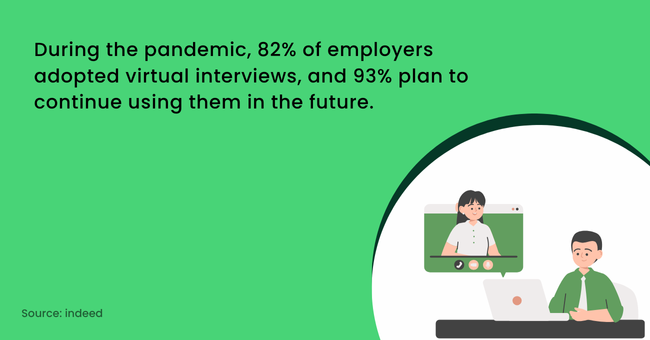
This is different from a traditional live interview, where a recruiter and candidate both need to be available at the same moment. Adoption has been rapid - 82% of employers adopted virtual interviews during the pandemic, and 93% said they planned to keep using them going forward.
Understanding the benefits of one-way video interview adoption helps hiring teams build a genuinely efficient asynchronous hiring process - candidates complete interviews without real-time interaction, and recruiters review responses whenever it's convenient. This makes it especially useful for remote hiring, where candidates and hiring teams are often spread across different time zones.
As more companies adopt a one way video interview platform, the advantages of asynchronous interviews show up clearly in two places: faster pipelines and fewer geographic or scheduling constraints. The right video interview software benefits teams by automating the repetitive parts of screening while keeping interview quality high.
The single biggest benefit of one-way video interview adoption is pipeline speed. Traditional interviews require aligning multiple calendars, which is almost always where delays creep in. With an asynchronous video interview, recruiters can review a candidate's response the moment it's submitted - no waiting for a scheduled slot to open up.
This is how teams reduce time-to-hire with video interview workflows and build a genuinely scalable recruitment process for fast-growing teams. By applying fast hiring techniques with video interview screening, companies move through large applicant pools without the pipeline stalling out. Most platforms also add automation and analytics to help recruiters improve screening speed and prioritize the strongest candidates first.
One of the key benefits of one-way video interviews is the flexibility it offers to both candidates and recruiters. Candidates can complete a one-way video interview at their convenience, eliminating scheduling conflicts and reducing interview stress. This is especially beneficial for remote hiring, global recruitment, and professionals with busy schedules.
For recruiters, the asynchronous hiring process removes the need for repeated screening calls and calendar coordination. Hiring teams can review interviews anytime, collaborate more efficiently, and make faster hiring decisions. This flexibility helps organizations improve productivity, support remote hiring video interviews, and reduce time-to-hire.
A one-way video interview ensures every candidate answers the same questions under the same conditions, creating a fair and structured evaluation process. This improves candidate screening consistency and makes it easier to compare applicants objectively.
With asynchronous candidate assessment, recruiters can review responses multiple times, share recordings with hiring managers, and use standardized scoring criteria. When combined with AI video interview screening, organizations can streamline screening, reduce unconscious bias, and make more informed hiring decisions while keeping final evaluations human-led.
A one-way video interview helps organizations manage high-volume hiring without increasing recruiter workload. By allowing candidates to complete interviews asynchronously, hiring teams can screen more applicants in less time, making it an ideal solution for startups, expanding businesses, and enterprise recruitment.
This scalable recruitment process enables recruiters to shortlist qualified candidates faster while maintaining a consistent hiring standard. With a one-way video interview platform, organizations can improve screening speed, reduce time-to-hire, and efficiently scale hiring across multiple roles and locations.
One of the major benefits of one-way video interviews is the positive experience it creates for candidates. Instead of attending scheduled live interviews, candidates can record their responses at a convenient time, reducing stress and providing greater flexibility throughout the hiring process.
The asynchronous hiring process also allows candidates to prepare thoughtful responses in a comfortable environment, resulting in a more engaging interview experience. By reducing scheduling conflicts and offering a user-friendly interview process, organizations can improve candidate satisfaction, strengthen their employer brand, and attract top talent.
video interview helps organizations reduce recruitment costs by eliminating repetitive screening calls, travel expenses, and lengthy interview scheduling. Recruiters can review recorded interviews at their convenience, allowing them to evaluate more candidates in less time and focus on higher-value hiring activities.
By adopting time-saving recruitment methods, companies can improve recruiter productivity, optimize hiring resources, and reduce overall recruitment costs. These video interview software benefits make one-way interviews a cost-effective solution for businesses of all sizes.
One of the biggest benefits of one-way video interviews is the ability to reach candidates regardless of their location. A remote hiring video interview enables organizations to connect with skilled professionals across different cities, countries, and time zones without the need for travel or complex scheduling.
This flexibility supports remote team hiring video interviewing and helps companies attract diverse talent while expanding their recruitment reach. By removing geographical barriers, businesses can build stronger teams and hire the best candidates based on skills rather than location.
A one-way video interview makes collaboration easier by allowing multiple recruiters and hiring managers to review candidate responses independently. Team members can watch interviews, share feedback, and evaluate applicants using the same scoring criteria, leading to more informed hiring decisions.
This structured evaluation improves communication, ensures consistent candidate assessment, and reduces delays caused by scheduling panel interviews. As a result, organizations can make faster, more confident hiring decisions while maintaining fairness throughout the recruitment process.
video interview helps create a modern, professional hiring experience that reflects positively on your organization. Candidates appreciate a streamlined interview process that respects their time and provides flexibility. A well-structured interview experience demonstrates that your company values innovation and efficient communication.
By delivering a consistent recruitment experience for every applicant, organizations can strengthen their employer brand, increase candidate engagement, and leave a positive impression—even among candidates who are not selected.
A one-way video interview provides valuable recruitment insights that help organizations continuously improve their hiring process. Recruiters can track interview completion rates, candidate performance, and evaluation scores to identify trends and make more informed hiring decisions.
These analytics support a more scalable recruitment process by improving screening accuracy and optimizing future hiring strategies. By using data alongside structured evaluation, organizations can reduce hiring mistakes, improve recruitment outcomes, and build stronger teams more efficiently.
Adopting one-way video interviews requires thoughtful planning and preparation. Best practices include:
Avoid common pitfalls, such as overly long interviews or unclear expectations, which can discourage candidates.

One-way video interviews are transforming modern recruitment by helping companies evaluate candidates faster, reduce scheduling challenges, and create a more flexible hiring experience.
The benefits of one-way video interviews extend beyond saving time. They help recruiters improve screening consistency, manage larger applicant pools, support remote hiring, and build a scalable recruitment process. As organizations continue to compete for skilled talent, asynchronous video interviews provide a practical way to improve hiring efficiency while maintaining a structured candidate evaluation process.
For recruiters and HR teams looking to reduce screening time, improve candidate selection, and hire more effectively, adopting a reliable one-way video interview platform is becoming an essential step toward modern recruitment success.
One-way video interviews help recruiters speed up candidate screening, reduce scheduling conflicts, and improve the overall hiring workflow. They allow hiring teams to review candidate responses anytime while maintaining a structured and consistent evaluation process.
One-way video interviews eliminate the need to schedule initial screening calls with every applicant. Recruiters can review recorded responses at their convenience, quickly identify suitable candidates, and reduce the overall time required for early-stage hiring.
Yes, one-way video interviews are highly effective for remote hiring because candidates can complete interviews from any location. They help distributed teams evaluate talent across different regions and time zones without scheduling challenges.
Yes. Since every candidate answers the same questions under the same conditions, structured video interviews promote fairer and more consistent evaluations. AI tools can further support objective screening when used responsibly.
One-way video interviews create a structured evaluation process where every candidate receives the same questions and interview format. This helps recruiters compare responses fairly, reduce inconsistency, and make more objective hiring decisions.
Async video screening cuts admin work while improving candidate experience. See personality, communication, and confidence-not just resumes. Try free for your next round.
Create Your First Interview Free2026 © All Rights Reserved - ScreeningHive