

Reduce Interview Scheduling Delays in Large Hiring Teams


Experience the power of AI-driven video screening and hire faster than ever.
Sign Up Now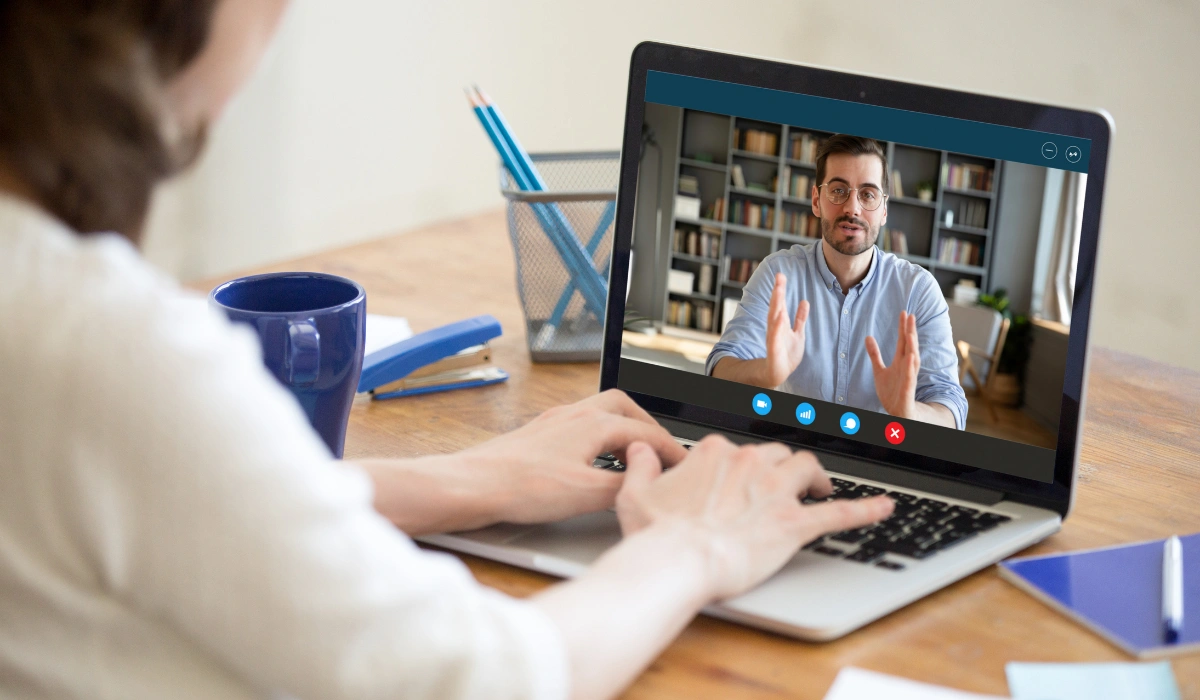
Aug 21, 2020 |
A one-way video interviewing is a recruiting method where a candidate records video answers to a fixed set of questions on their own schedule, and a recruiter reviews the responses later. No call is scheduled, and no one has to be online at the same time. This makes it fundamentally different from a phone screen or a video call, where both sides need to show up at once.
It's also called an asynchronous video interview or a pre-recorded video interview - three names for the same format. "Asynchronous" refers to the fact that recording and reviewing happen on separate schedules, while "pre-recorded" describes it from the recruiter's side, since the footage is already finished by the time anyone watches it. Whichever term a job posting or platform uses, the process behind it is identical.
A one-way video interview is a structured, asynchronous screening step in which a recruiter sends a candidate a set of preset questions, and the candidate records video responses through an online interview platform. There's no live call - the recruiter reviews the recording at a time that works for them, independent of when the candidate recorded it.
Unlike traditional live interviews, where both the interviewer and candidate must be available at the same time, one-way video interviewing give candidates the flexibility to record answers on their own time. This feature makes one-way video interviewing an attractive and time-saving option for both employers and job seekers.
Every business wants to maximize efficiency, and the recruiting process is no exception. Traditional hiring often involves multiple rounds of phone screens and scheduled calls, which can stretch a single early-stage screening step out over several days per candidate once you account for back-and-forth scheduling. One-way video interviewing remove most of that back-and-forth. Here's how they benefit employers:
One-way video interviewing isn't just built for employers - it offers real advantages for candidates too. Here's how this format benefits job seekers:
While many organizations are adopting one-way video interviewing, others hesitate due to misconceptions about the technology. Let’s address some of the most common myths surrounding one-way video interviews:
1. One-Way Video Interviews Reveal a Candidate's True Personality
Research shows that candidates behave similarly in both virtual and traditional interviews. For example, candidates tend to arrive early for both live and video interviews. The technology behind the interview does not significantly impact the candidate’s personality or behavior.
2. One-Way Video Interviews Are Just Like Skype or Google Hangouts
While tools like Skype and Google Hangouts are free, they aren’t designed for hiring. These platforms lack the features necessary for effective interviews, such as automated scheduling, candidate tracking, and video quality designed specifically for hiring. One-way video interviewing platforms provide reliable tools that enhance the candidate experience.
A study found that only 24% of candidates who used Skype for interviews agreed that it was easy to use, while the rest reported frustration with the platform.
3. Candidates Don’t Like One-Way Video Interviews
It’s a common misconception that candidates don’t like one-way video interviews. In fact, many candidates appreciate the flexibility they offer. As technology becomes more ingrained in our daily lives, candidates are increasingly comfortable using virtual interview tools.
4. One-Way Video Interviews Have a Difficult Setup
Many believe that one-way video interview platforms require complex setups. However, these platforms are specifically designed to be user-friendly and easy to configure, even for those without technical expertise.
Once you know what a one-way video interviewing tool is, the natural next question is how it actually works day to day. It's a common assumption that the process is complicated to set up or use - but in practice, it follows a short, straightforward flow.
Here's how a one-way video interviewing works, step by step:
This simple process saves time, keeps things consistent, and cuts out the back-and-forth scheduling that usually slows down early hiring steps.
If you're looking for a reliable one-way video interview tool, ScreeningHive offers an easy-to-use platform that can significantly improve your hiring process. Designed to provide both employers and candidates with a seamless experience, ScreeningHive enables you to conduct interviews efficiently without any hassle. It’s also affordable, making it an ideal choice for startups and small businesses looking to integrate video interviewing technology into their recruitment strategy.
.webp.dat)
A one-way video interview is a recruiting step where a candidate records video answers to a set of preset questions on their own time. There's no live call - the recruiter reviews the recording separately, whenever it's convenient for them. It's typically used early in the hiring process, before any live conversation happens.
In a one-way interview, the candidate records answers whenever they're ready, and the recruiter reviews the video independently, with no real-time interaction. A live interview requires both the recruiter and candidate to be online at the same time, with back-and-forth conversation and follow-up questions. Because of this, one-way interviews suit early screening, while live interviews suit deeper, later-stage conversations.
Employers save significant time by reviewing recorded answers instead of scheduling and running individual phone screens. Since every candidate answers the same questions, comparisons are more consistent and fair. It also widens the talent pool by removing time-zone and location barriers, and helps recruiters focus their live-interview time on the strongest applicants.
Candidates can record their answers whenever it suits their schedule, which is especially helpful for people currently employed elsewhere. Without a live interviewer watching in real time, many candidates feel less pressure and can answer more thoughtfully. It also means candidates in different locations or time zones get a fair shot at roles they might otherwise miss.
Yes - most platforms are built so recruiters can create an interview and send invitations within minutes, with no technical background required. On the candidate side, all that's needed is a phone, tablet, or laptop with a working camera. Guided prompts on both ends make the process simple even for first-time users.
Async video screening cuts admin work while improving candidate experience. See personality, communication, and confidence-not just resumes. Try free for your next round.
Create Your First Interview Free2026 © All Rights Reserved - ScreeningHive